How to Identify a Pure Silk Saree : Your Ultimate Buying Guide
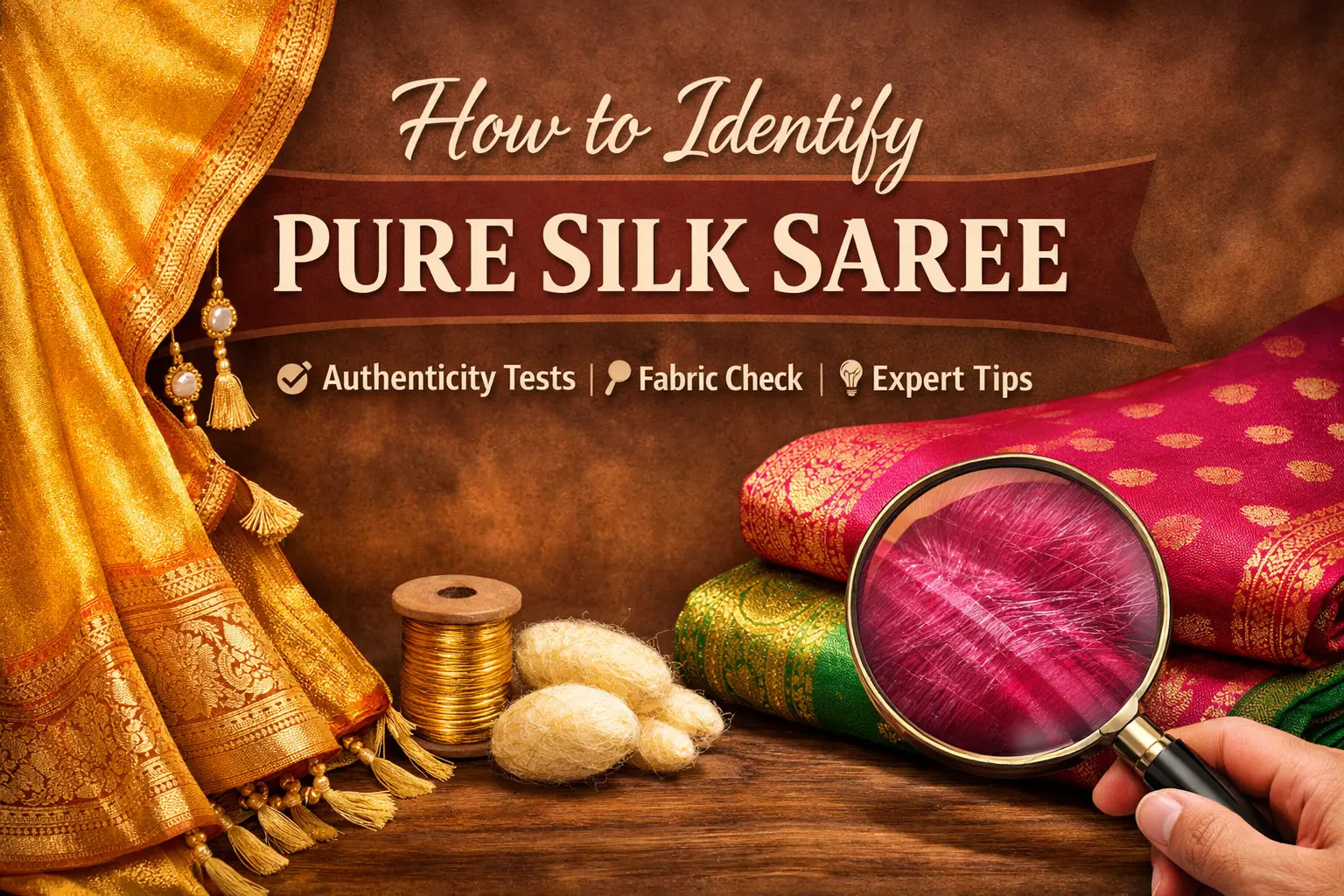
There’s something magical about slipping into a pure silk saree. The way it catches the light, the gentle rustle as you walk, and that unmistakable feeling of luxury against your skin – it’s why generations of Indian women have cherished silk as their go-to for weddings, festivals, and special occasions. But here’s the truth: not every saree that looks silky actually is.
In today’s market, artificial silk (art silk) and synthetic blends have become so convincing that even experienced eyes can get fooled. Buying the wrong one doesn’t just hurt your wallet – it robs you of that timeless elegance and durability that only pure silk saree offers. Whether you’re shopping for your first wedding saree or adding to your collection, learning how to spot genuine silk will save you money, heartbreak, and countless regrets.
In this guide, I’ll walk you through simple, practical tests you can do right at the store or at home. No fancy equipment needed – just your hands, eyes, and a little common sense.
What Makes a Pure Silk Saree Special?
Pure silk comes from the cocoons of silkworms (usually mulberry silk). It’s a natural protein fibre, which is why it behaves completely differently from polyester or rayon blends. A genuine pure silk saree breathes with you, drapes beautifully, feels warm yet cool, and lasts for decades with proper care. Artificial versions might look similar at first glance but fade faster, feel stiff, and never give you that heirloom quality.
Easy Home Tests to Identify Pure Silk Saree
1. The Burn Test (Most Reliable)
This is the gold standard. Pull out a single loose thread from a hidden corner (pallu edge or inside hem). Light it carefully with a match.
- Pure silk: Burns slowly, self-extinguishes when you remove the flame, smells exactly like burning hair or feathers, and leaves a brittle black ash that you can crush into fine powder between your fingers.
- Artificial silk: Melts into a hard plastic bead, smells like burning plastic, and the flame often keeps going.
Always do this test safely and only on a tiny thread – never on the main fabric!
2. The Warmth / Friction Test
Rub a section of the saree vigorously between your palms or fingers for 10–15 seconds.
Pure silk warms up noticeably because it’s a natural insulator. Artificial silk stays cool or feels neutral.
3. The Touch and Drape Test
Run your hand over the fabric. Genuine pure silk feels buttery-soft with a slight natural grip – never slippery or sticky. Hold the pallu and let it fall; it should drape in soft, fluid folds without stiffness.
4. The Lustre Test
Stand near natural light and tilt the saree at different angles. Pure silk shows a deep, shifting pearlescent glow that changes colour slightly. Artificial silk gives a flat, uniform, almost mirror-like shine that looks the same from every angle.
5. The Ring Test (Great for lighter silks)
Take off a plain ring and try to pull a small portion of the fabric through it. Pure silk glides through smoothly without bunching. Synthetics bunch up and get stuck.
6. The Sound Test
Gently rub the fabric near your ear. Real silk produces a soft, luxurious “scroop” or crisp rustling sound. Fake silk is silent or makes a plasticky rustle.
Pure Silk vs Artificial Silk – Quick Comparison
| Property | Pure Silk Saree | Artificial Silk Saree |
|---|---|---|
| Touch & Temperature | Warm when rubbed, soft with natural grip | Cool/slippery, plastic-like |
| Burn Test | Slow burn, hair smell, powdery ash | Melts, plastic smell, hard bead |
| Shine | Natural, multi-angle glow | Uniform, overly glossy |
| Weave | Slight natural irregularities | Perfectly even, machine-made |
| Drape | Flows like liquid | Stiff, holds shape awkwardly |
| Price (approx.) | ₹5,000 – ₹1,00,000+ | ₹800 – ₹3,000 |
| Longevity | Lasts generations with care | Fades and pills within 2–3 years |
Things to Consider Before Buying a Pure Silk Saree
- Look for the Silk Mark label – India’s official certification that guarantees 100% pure silk. Reputable sellers display it proudly.
- Buy from trusted weavers or brands (Kanchipuram, Banarasi, Mysore, Paithani regions are famous for authenticity).
- Check the reverse side – in pure silk, the design should show faintly on the back.
- Budget wisely: A good starter pure silk saree begins around ₹6,000–₹12,000. Anything below ₹4,000 is almost certainly art silk.
- Consider the occasion: Heavy Kanchipuram or Banarasi for weddings, lighter Mysore silk for parties and poojas.
Styling Tips Once You Own a Pure Silk Saree
Pure silk loves drama. Pair a rich red Banarasi with gold jewellery and kohl-lined eyes for a traditional wedding look. A pastel Mysore silk looks ethereal with minimal accessories for daytime functions. The natural sheen means you don’t need heavy embellishments – let the fabric do the talking.
Care & Maintenance Tips for Pure Silk Sarees
- Always dry clean embroidered or zari-heavy sarees.
- For plain silk, hand wash in cold water with mild detergent (like baby shampoo). Never wring – roll in a towel to remove water.
- Dry in shade only – direct sun fades colours permanently.
- Iron on low heat inside-out with a cotton cloth over it.
- Store folded in breathable cotton or muslin bags with neem leaves or silica gel to prevent silverfish and moisture.
- Never hang silk sarees for long – it stretches the fabric.
Common Mistakes to Avoid
- Assuming “soft and shiny = pure silk” (many art silk sarees are softer than real silk!)
- Skipping the burn test because you’re scared of damaging it
- Buying online without asking for close-up photos of the weave and label
- Ignoring the price – if it seems too good to be true, it usually is
Pro Tips from Years of Shopping Silk
- Always ask to see the saree in natural daylight before buying.
- Feel the weight – pure silk has a lovely heft without being heavy.
- Trust your instincts. If something feels “off,” walk away.
Frequently Asked Questions
1. Can I do these tests in the store? Yes! Most good shops allow you to pull a thread or rub the fabric. Just be polite and explain you want to check authenticity.
2. Is Silk Mark mandatory? No, but it’s the safest guarantee. Many genuine weavers don’t have it, but reputed stores do.
3. Will pure silk saree fade after first wear? No. With proper care, colours stay vibrant for years.
4. Are all Banarasi/Kanchipuram sarees pure silk? Not anymore. Always check for Silk Mark or do the tests.
5. How do I know if my old family saree is pure silk? Do the burn test on a loose thread from the border. If it passes, you’re lucky to own a treasure!
Owning a pure silk saree is more than just owning a garment – it’s owning a piece of India’s rich textile heritage. Once you learn these simple identification tricks, you’ll shop with confidence and wear your silk with pride. The next time you drape one, you’ll feel the difference instantly.
Happy saree shopping, beautiful! Your perfect pure silk saree is waiting – now you know exactly how to find it.

How to Style a Simple Saree to Look Like a Designer Outfit
How to Choose the Perfect Traditional Outfit for Special Occasions
Timeless Elegance: Traditional Indian Fashion That Never Goes Out of Style
About Author
