Top 10 Traditional Sarees Every Indian Woman Should Own
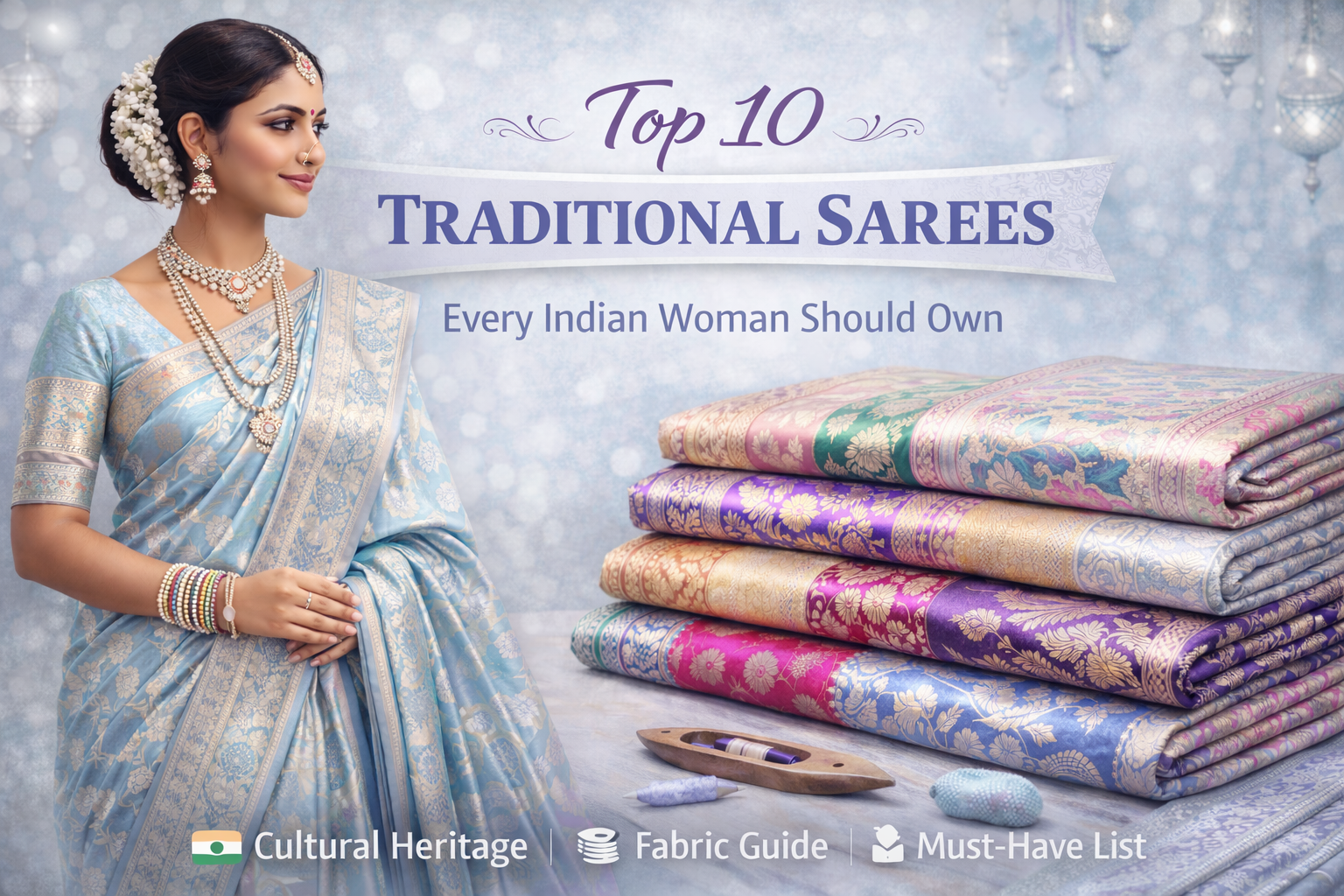
Sarees have always held a special place in the hearts of Indian women. They’re more than just fabric; they’re a symbol of grace, heritage, and timeless elegance. Whether you’re attending a family wedding, a festive celebration, or simply want to feel connected to your roots, owning a collection of top 10 traditional sarees can make all the difference. These pieces aren’t just wardrobe essentials—they tell stories of craftsmanship passed down through generations, reflecting the diverse cultures across India.
I remember my first saree, a simple cotton one from my grandmother’s collection. It wasn’t fancy, but draping it made me feel empowered and beautiful. That’s the magic of traditional sarees: they boost your confidence while honoring tradition. In today’s fast-paced world, where fusion wear is trending, it’s easy to overlook these classics. But building a versatile saree wardrobe ensures you’re ready for any occasion without compromising on style or comfort. This guide to the top 10 traditional sarees will help you understand why each one deserves a spot in your closet, from their unique weaves to practical styling ideas. Let’s dive in and explore how these sarees can elevate your ethnic wear game.
1. Banarasi Silk Saree
The Banarasi silk saree, originating from Varanasi, is a must-have for its opulent zari work and intricate motifs inspired by Mughal designs.
Crafted from pure silk, it features gold or silver threads that give it a royal sheen. Ideal for weddings or grand events, this saree drapes beautifully and adds a touch of luxury.
Styling tip: Pair it with a contrasting blouse and minimal jewelry to let the saree shine. For budgets, entry-level ones start at around 5,000 INR, while premium pieces can go up to 50,000 INR or more.
Avoid common mistakes like over-accessorizing, which can overshadow its elegance.
2. Kanjeevaram Silk Saree
Hailing from Kanchipuram in Tamil Nadu, the Kanjeevaram saree is renowned for its heavy silk and vibrant colors, often woven with temple motifs.
The fabric is durable mulberry silk, making it perfect for heirloom pieces that last generations.
Wear it for religious ceremonies or formal dinners—its weight gives a structured drape. Budget-wise, authentic ones range from 10,000 to 1,00,000 INR.
Pro tip: Choose earth tones for daytime events to keep it subtle yet striking.
3. Chanderi Saree
Light and airy, the Chanderi saree from Madhya Pradesh blends silk and cotton for a sheer, comfortable feel.
Its subtle sheen comes from zari borders, ideal for semi-formal gatherings or office parties.
Styling suggestion: Team with pearl earrings and a sleek bun. Prices start at 2,000 INR for cotton blends, up to 15,000 for pure silk.
Steer clear of dry cleaning too often, as it can dull the fabric.
4. Bandhani Saree
This tie-and-dye wonder from Gujarat and Rajasthan features intricate dot patterns created by skilled artisans.
Made from georgette or chiffon, it’s lightweight and vibrant, suiting festive occasions like Diwali.
For styling, add chunky silver jewelry. Affordable options begin at 1,500 INR, with designer versions at 10,000 INR.
Common pitfall: Washing in hot water, which fades the colors.
5. Patola Saree
The double ikat Patola from Patan, Gujarat, is a labor-intensive masterpiece with symmetrical patterns on both sides.
Woven from silk, it’s reserved for special events like engagements due to its exclusivity.
Budget consideration: Expect to pay 20,000 INR upwards for genuine ones.
Tip: Drape in Gujarati style for authenticity.
6. Paithani Saree
Maharashtra’s pride, the Paithani saree boasts peacock motifs and a rich pallu in silk.
Its handloom weave ensures breathability for humid climates.
Perfect for cultural festivals; style with gold bangles. Prices range from 8,000 to 80,000 INR.
Avoid storing in direct sunlight to prevent color loss.
7. Jamdani Saree
From Bengal, the Jamdani is a fine muslin saree with woven floral designs that appear to float on the fabric.
Lightweight cotton or silk makes it great for summer weddings.
Styling idea: Opt for a high-neck blouse for a modern twist. Entry prices around 3,000 INR.
Mistake to dodge: Ironing on high heat, which can scorch the delicate threads.
8. Tant Saree
Another Bengali favorite, the Tant saree is crisp cotton with simple borders, ideal for daily wear or pujas.
Its handwoven texture provides comfort in tropical weather.
Budget-friendly at 1,000 to 5,000 INR. Pair with bindis and fresh flowers.
Pro tip: Starch it lightly for that signature crispness.
9. Kasavu Saree
Kerala’s iconic Kasavu features off-white cotton with gold borders, symbolizing simplicity and tradition.
Wear for Onam or temple visits; it’s easy to maintain.
Prices start at 2,000 INR. Style minimally with jasmine in your hair.
Common error: Using harsh detergents that yellow the white.
10. Pochampally Ikat Saree
From Telangana, this ikat saree has geometric patterns dyed before weaving.
Silk or cotton variants suit various occasions, from casual to semi-formal.
Affordable from 2,500 INR. Tip: Experiment with pleats for a contemporary look.
Comparison Table: Silk vs. Cotton Traditional Sarees
| Saree Type | Fabric | Price Range (INR) | Best Occasions | Durability |
|---|---|---|---|---|
| Banarasi Silk | Pure Silk | 5,000–50,000 | Weddings, Festivals | High |
| Kanjeevaram Silk | Mulberry Silk | 10,000–1,00,000 | Ceremonies, Formals | Very High |
| Chanderi | Silk-Cotton | 2,000–15,000 | Semi-Formal, Day Events | Medium |
| Tant | Cotton | 1,000–5,000 | Daily Wear, Pujas | Medium |
| Kasavu | Cotton | 2,000+ | Traditional Festivals | High |
This table highlights how silk options like Banarasi and Kanjeevaram offer luxury for special events, while cotton ones like Tant and Kasavu provide everyday comfort at lower costs.
Pro Tips for Building Your Saree Collection
- Start with versatile colors like red, gold, and pastels that match multiple blouses.
- Invest in quality over quantity—authentic weaves appreciate in value.
- Mix traditional drapes with modern blouses for fusion looks.
- Attend saree exhibitions to feel fabrics firsthand.
- Layer with jackets or capes for cooler weather.
Things to Consider Before Buying
Before adding any of these top 10 traditional sarees to your cart, think about your body type—lighter fabrics suit petite frames, while heavier ones flatter curvier figures. Check for authenticity certificates, especially for handlooms. Consider your lifestyle: if you’re always on the go, opt for easy-care options. Factor in climate—breathable cottons for summers, silks for winters. Finally, set a budget and compare online sellers for deals, but always read reviews to avoid fakes.
Care & Maintenance Tips
To keep your top 10 traditional sarees looking pristine, dry clean silks only when necessary and hand wash cottons in cold water. Store them folded in muslin bags away from moisture and insects—use neem leaves as a natural repellent. Iron on low heat inside out, and avoid hanging them to prevent stretching. For zari work, professional cleaning is key to preserve the shine. Regular airing out prevents musty smells.
Frequently Asked Questions (FAQs)
- What makes these the top 10 traditional sarees? They represent India’s diverse regions, offering a mix of luxury, comfort, and versatility for various occasions.
- How do I know if a saree is authentic? Look for handloom marks, buy from reputed sellers, and feel the texture—genuine ones have irregularities from manual weaving.
- Can I wear these sarees daily? Yes, lighter ones like Tant or Chanderi are perfect for everyday use, while silks are for special events.
- What’s the best way to style traditional sarees modernly? Pair with crop tops, belts, or statement jewelry to add a contemporary edge.
- Are these sarees expensive? Prices vary, but you can find quality pieces starting from 1,000 INR; invest based on your needs.
In wrapping up, curating the top 10 traditional sarees is about embracing your cultural essence while making smart choices that fit your life. Each one brings its own charm, from the regal Banarasi to the simple Kasavu, helping you navigate occasions with poise. Remember, fashion is personal—pick what resonates with you, and wear it with confidence. Here’s to celebrating the beauty of sarees in every fold.
10 Iconic Ethnic Styles Every Woman Should Experience Once
Party Wear Sarees That Will Make You Stand Out Instantly
How to Style a Simple Saree to Look Like a Designer Outfit
About Author
