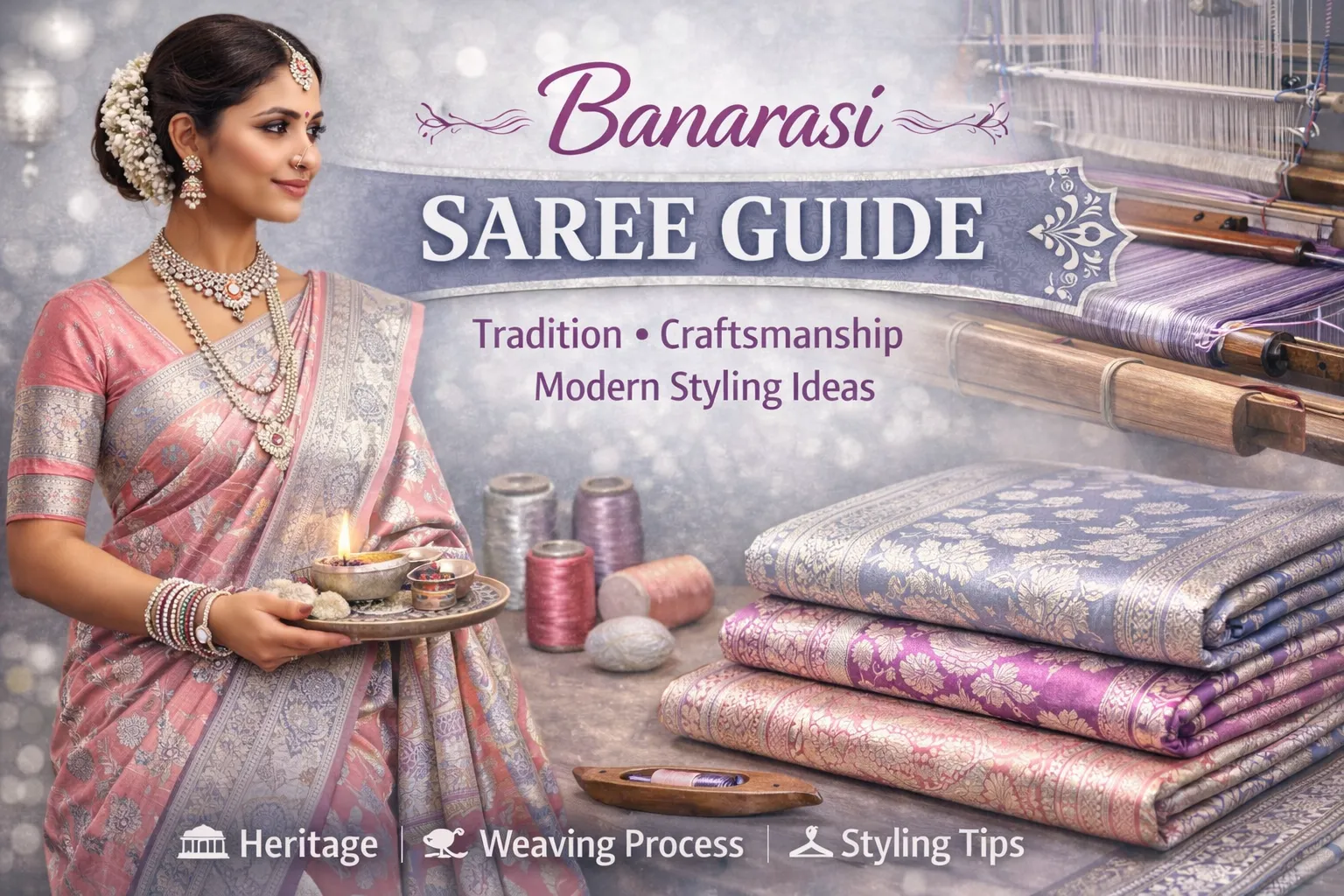
Have you ever draped a Banarasi saree and felt like you’re carrying a piece of history on your shoulders? There’s something magical about these timeless garments that blend India’s rich heritage with effortless elegance. As someone who’s spent over a decade writing about Indian fashion, I’ve seen how a well-chosen Banarasi saree can transform an ordinary day into something special. Whether you’re attending a wedding, a family gathering, or just want to add a touch of tradition to your wardrobe, understanding the Banarasi saree is key to making smart style choices.
The Banarasi saree originates from Varanasi, a city steeped in culture and craftsmanship. It’s not just fabric; it’s a story woven with threads of gold and silver, passed down through generations. In today’s fast-paced world, where modern outfits dominate, the Banarasi saree stands out as a versatile option that honors tradition while adapting to contemporary trends. Why is this guide important? Because many women love ethnic wear but feel overwhelmed by choices. We’ll explore its roots, the art behind it, and fresh styling ideas to help you wear it with confidence. By the end, you’ll know how to pick, style, and care for a Banarasi saree that suits your lifestyle and budget, making every occasion memorable without any hassle.
The Rich Tradition of Banarasi Sarees
The Banarasi saree has roots dating back to ancient times, influenced by Mughal emperors who brought Persian motifs to Indian weaving. Varanasi, or Banaras, became the hub for this craft, where artisans create sarees that symbolize luxury and royalty.
These sarees hold deep cultural value in Indian society. They’re often worn during festivals like Diwali or weddings, representing prosperity and grace. In many families, a Banarasi saree is passed down as an heirloom, connecting generations.
What makes them special is their ability to evolve. While staying true to tradition, modern versions incorporate lighter fabrics and subtle designs, appealing to younger women who want ethnic wear without the heaviness.
Understanding the Craftsmanship
Crafting a Banarasi saree is an art form that takes weeks or even months. Skilled weavers use handlooms to create intricate patterns with zari (gold or silver threads) on silk bases.
The primary fabric is pure silk, known for its sheen and durability. Some variations use georgette or organza for a lighter feel, but traditional ones stick to Katan silk, which is twisted for extra strength.
Motifs like paisleys, florals, and jangla (dense foliage) are common, inspired by nature and mythology. Each design tells a story, making every Banarasi saree unique.
Weavers often work in dim-lit workshops, relying on memory and precision. This dedication ensures the saree’s quality, but it also means authentic pieces come at a price.
Types of Banarasi Sarees
Banarasi sarees come in various types, each suited to different preferences and occasions. Knowing the differences helps you choose wisely.
For instance, pure silk ones are heavy and opulent, ideal for grand events. Katan silk offers a balance of tradition and comfort, while organza provides a breezy, modern twist.
Here’s a quick comparison to guide you:
| Type | Fabric Base | Weight | Best For | Price Range (INR) |
|---|---|---|---|---|
| Pure Silk | 100% Silk | Heavy | Weddings, formal rituals | 10,000 – 50,000 |
| Katan Silk | Twisted Silk | Medium | Festive parties, daily ethnic | 5,000 – 20,000 |
| Organza Banarasi | Silk-Organza Blend | Light | Casual outings, summer events | 3,000 – 15,000 |
| Georgette Banarasi | Silk-Georgette | Light-Medium | Office wear, semi-formal | 4,000 – 18,000 |
This table shows how fabric affects usability and cost. Pick based on your needs—go for lighter ones if you prioritize comfort.
Modern Styling Ideas for Banarasi Sarees
Styling a Banarasi saree doesn’t have to be traditional only. Mix it with modern elements for a fresh look.
For weddings, pair a red Banarasi saree with gold jewelry and a sleek bun. Add a belt for a defined waistline, blending old and new.
Casual days? Drape a light organza Banarasi saree over jeans or with a crop top. This fusion style works for brunches or shopping trips.
Office settings call for subtlety. Choose a pastel Banarasi saree with minimal zari, styled with a collared blouse and minimal accessories.
Occasion-based suggestions:
- Festivals: Bright colors like maroon or green, with statement earrings.
- Parties: Experiment with dhoti-style draping for a trendy vibe.
- Daily wear: Opt for printed Banarasi sarees with simple blouses.
Budget-wise, start with affordable georgette versions under 5,000 INR for everyday styling.
Common Mistakes to Avoid When Wearing a Banarasi Saree
One common error is over-accessorizing. A Banarasi saree is ornate, so keep jewelry simple to avoid looking cluttered.
Another is ignoring the blouse fit. A ill-fitting blouse can ruin the drape—ensure it’s tailored well.
Don’t forget the occasion. Wearing a heavy Banarasi saree to a casual event might feel out of place; save it for formal ones.
Lastly, skipping petticoats or proper pinning leads to slips. Use safety pins and a matching underskirt for security.
Pro Tips from a Fashion Expert
In my experience, always check for the GI tag to ensure authenticity—it’s a mark of genuine Banarasi craftsmanship.
Layer with a dupatta from the saree fabric for added volume in photos.
For modern twists, try contrasting blouses, like a velvet one with a silk Banarasi saree.
Invest in versatile colors like ivory or navy; they pair with multiple outfits.
Pro tip: Steam iron on low heat to maintain the zari’s shine without damage.
Things to Consider Before Buying a Banarasi Saree
Before purchasing, think about authenticity. Look for handwoven labels and avoid machine-made fakes.
Budget is crucial—set a range based on use. Entry-level Banarasi sarees start at 3,000 INR, while heirloom pieces go higher.
Consider your body type. Heavier fabrics suit taller frames, while lighter ones flatter petite women.
Check the weave density; tighter weaves last longer.
Finally, buy from reputable sellers in Varanasi or trusted online stores to avoid duplicates.
Care & Maintenance Tips for Your Banarasi Saree
Proper care keeps your Banarasi saree looking new. Dry clean only, especially for zari work, to prevent tarnishing.
Store folded in muslin cloth, away from direct sunlight, to avoid fading.
For minor stains, use a soft brush with mild soap, but test first.
Air it out occasionally to prevent moth damage—add neem leaves for natural protection.
Iron on the reverse side with low heat, and never fold wet.
Frequently Asked Questions (FAQs)
- What makes a Banarasi saree different from other silk sarees? A Banarasi saree stands out with its zari work and intricate motifs from Varanasi, unlike simpler weaves in other regions.
- Can I wear a Banarasi saree for everyday occasions? Yes, choose lighter versions like georgette for comfort, and style simply for daily use.
- How do I identify a real Banarasi saree? Look for the GI tag, handloom marks, and irregular patterns that show handmade quality.
- What’s the average price for a good Banarasi saree? It ranges from 5,000 to 20,000 INR, depending on fabric and craftsmanship.
- Are Banarasi sarees suitable for all seasons? Heavier silk ones are for winters, while organza or georgette work well in summers.
In wrapping up this guide, remember that a Banarasi saree is more than clothing—it’s a celebration of artistry and tradition. From its meticulous craftsmanship to versatile styling options, it offers endless ways to express your personal style. Whether you’re drawn to its historical charm or modern adaptations, embracing a Banarasi saree empowers you to make fashion choices that feel authentic and joyful. Step out with one, and let it weave its magic into your life.