Banarasi vs Paithani vs Kanjeevaram: Which Bridal Saree is Best?
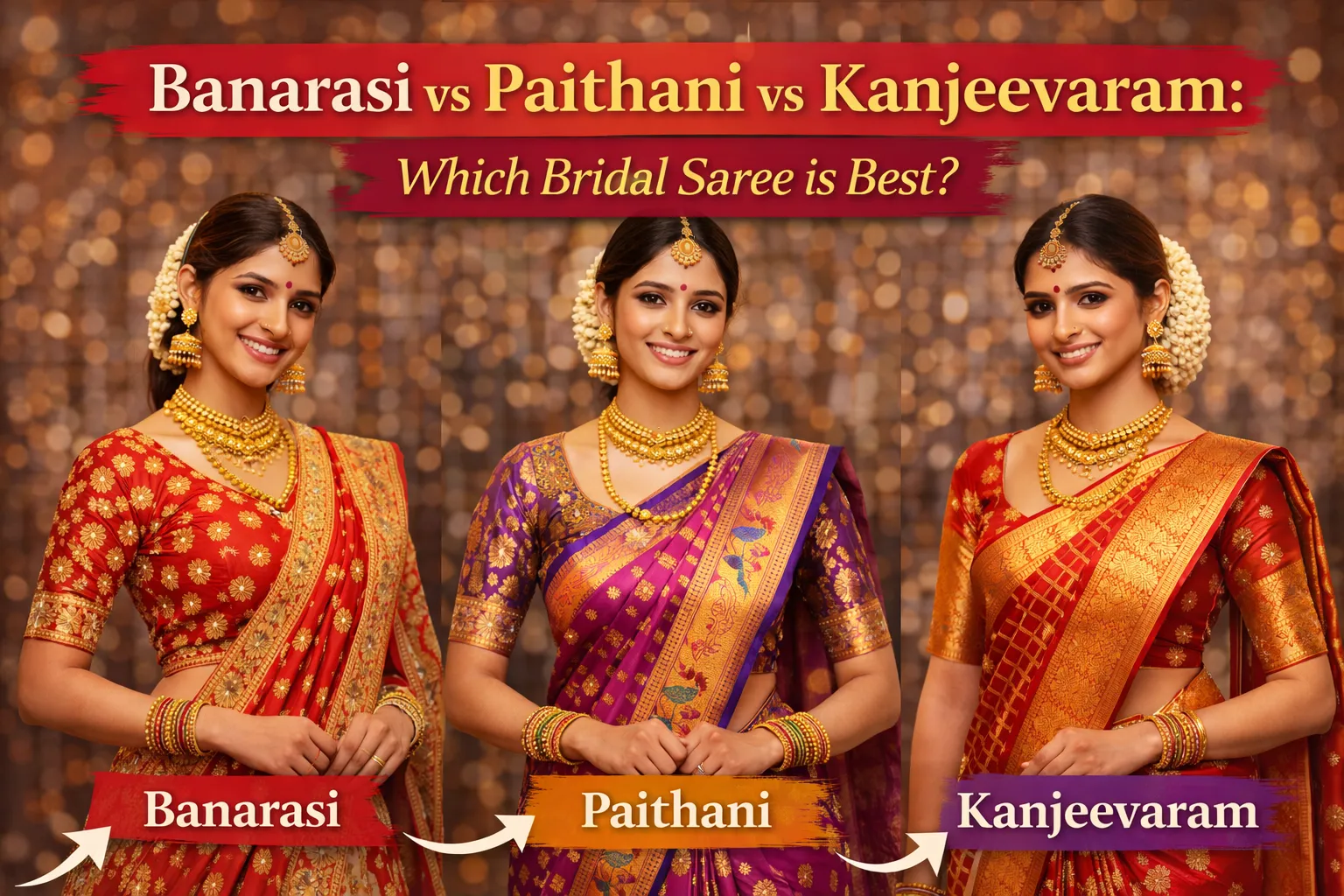
Your wedding day is coming, and suddenly everyone is asking the same question: “Which bridal saree is best for you?”
I know the feeling. You want something that makes you feel like a queen, something your grandchildren will still talk about. And right now, three names keep coming up—Banarasi, Paithani, and Kanjeevaram. Each one is legendary. Each one is breathtaking. But only one will feel like it was woven just for you.
I’ve helped hundreds of brides pick their dream saree, and I promise this: there is no single “best” saree. There is only the best saree for YOU—your body, your budget, your wedding style, and the story you want to tell. Let me walk you through all three like we’re sitting together with chai, swatches spread on the table.
What Makes Banarasi Sarees So Special?
Banarasi sarees come from Varanasi, the city of ghats and temples. They have been the royal choice for centuries. Mughal emperors and Rajput queens both fell in love with them.
The magic is in the weave: pure silk with real gold or silver zari. The motifs are usually Mughal-inspired—flowers, birds, jharokha patterns, and the famous mina work. When light hits a Banarasi, it literally sparkles like tiny diamonds are dancing on the fabric.
Best for brides who:
- Love heavy, opulent looks
- Want that royal North Indian wedding vibe
- Are okay carrying 1.5–2 kg of saree all day
Price range: Genuine handloom Banarasi starts at ₹25,000 and easily crosses ₹3–5 lakh for pure zari bridal pieces.
Why Paithani Sarees Feel Like Poetry
If Banarasi is the queen, Paithani is the poet.
Born in Paithan, Maharashtra, these sarees are softer, lighter, and bursting with peacock and lotus motifs. The pallu is where the magic happens—muniya borders, swirling peacocks, and that famous oblique square design.
The silk is finer than Kanjeevaram and the zari is tested by burning—if it leaves no ash, it’s real gold zari. Pure magic.
Best for brides who:
- Want something lightweight (perfect for long rituals)
- Love bright jewel tones (emerald green, royal blue, rani pink)
- Are having a day wedding or summer wedding
Price range: Real handwoven Paithani starts at ₹35,000 and goes up to ₹4–6 lakh for double pallu or antique pieces.
Kanjeevaram: The South Indian Love Story
No South Indian bride’s trousseau is complete without a Kanjeevaram. These sarees are woven in Kanchipuram, Tamil Nadu, and they are famous for their durability and that signature “pitni” contrast border.
The silk is heavier, the zari is thicker, and the colors—oh the colors! Mustard with purple border, peacock blue with red, coral with green—these combinations look ordinary in photos but absolutely electric in real life.
Best for brides who:
- Want something that will last generations (literally, my grandmother’s Kanjeevaram is 60 years old and still shining)
- Love bold contrast borders and temple jewellery
- Are okay with slightly heavier drape
Price range: Good Kanjeevarams start at ₹18,000–₹20,000, bridal ones with real zari begin at ₹50,000 and go till ₹10 lakh+ for wedding specials.
Side-by-Side Comparison Table (Because We All Love Clarity)
| Feature | Banarasi | Paithani | Kanjeevaram |
|---|---|---|---|
| Origin | Varanasi, Uttar Pradesh | Paithan, Maharashtra | Kanchipuram, Tamil Nadu |
| Weight | Heavy (1.5–2.5 kg) | Light to medium | Medium to heavy |
| Signature look | Rich zari all over | Peacock & lotus pallu | Contrast border & temple motifs |
| Best season | Winter weddings | Summer or day weddings | All seasons |
| Durability | Good | Very good | Excellent (heirloom quality) |
| Price range (bridal) | ₹25k–₹5 lakh+ | ₹35k–₹6 lakh+ | ₹50k–₹10 lakh+ |
| Shine | Maximum bling | Soft glow | Rich, classy sheen |
| Comfort for long wear | Moderate | High | Moderate to high |
Things to Consider Before Buying Your Bridal Saree
Ask yourself these questions honestly:
- What is my wedding season and venue?
Summer mandap or air-conditioned hall? Go Paithani. Outdoor winter evening? Banarasi will steal the show. - How much weight am I comfortable carrying?
I’ve seen brides crying because their heavy Banarasi made them tired by the pheras. Be real with yourself. - What jewellery am I wearing?
Polki and diamonds look insane with Banarasi. Temple jewellery screams Kanjeevaram. Emeralds and pearls romance Paithani. - Budget—be brutally honest
A genuine bridal piece from any of these three will never be “cheap.” If someone is selling a “pure zari Banarasi” for ₹10,000, run. - Will I wear it again?
Kanjeevaram wins hands-down for reuse. Many brides wear their wedding Kanjeevaram for their child’s first birthday or naming ceremony.
Common Mistakes Brides Make (And How to Avoid Them)
- Buying online without touching the fabric (biggest red flag)
- Choosing the saree only for photos, not comfort
- Falling for “pure zari” claims without testing (always do the burn test for gold zari)
- Matching the saree to lehenga trends instead of your personal style
- Ignoring the blouse—your blouse can make or break the look
Pro Tips from a Friend Who’s Seen It All
- If you’re curvy, Kanjeevaram’s stiff drape gives beautiful structure.
- Petite brides glow in Paithani’s softer fall.
- Tall brides can carry heavy Banarasi like nobody else.
- Mix and match—wear a Banarasi for reception, Paithani for haldi, Kanjeevaram for muhurtham.
- Always buy 10–20% extra length if you’re tall or want heavy pleats.
Care & Maintenance Tips (So Your Saree Outlives You)
- Never dry clean more than once a year
- Store in pure cotton or muslin cloth, never plastic
- Refrain from spraying perfume directly on the saree
- Air it out every 4–6 months
- For Kanjeevaram, the traditional way is to wrap it in old cotton sarees or khadi
Frequently Asked Questions
- Which bridal saree is best for fair skin?
All three look stunning. Fair brides glow in deep Banarasi reds and Paithani peacock greens. Dusky brides look ethereal in Kanjeevaram golds and corals. - Which is the most expensive?
It depends on the zari content. A real gold zari Kanjeevaram with 25 grams gold can cost more than a Banarasi or Paithani. - Can I wear Banarasi in South Indian wedding?
Absolutely! Many modern South Indian brides are choosing Banarasi for reception now. - Which one is lightest?
Paithani, hands down. - Which one looks best in photos?
Banarasi wins for night photography because of the zari sparkle. Paithani wins golden hour magic hour shots.
The Final Word
Dear bride-to-be, close your eyes for a second.
Imagine walking toward your groom. The lights are on you. Your heart is racing.
Now tell me—which saree made you feel like the most beautiful version of yourself?
That’s your answer.
There is no competition between Banarasi, Paithani, and Kanjeevaram.
They are all queens in their own kingdoms.
Choose the one that makes your heart skip a beat when you drape it.
Because on your wedding day, the best bridal saree isn’t the most expensive or the most trending one.
It’s the one that feels like home.
The Complete Bridal Wardrobe Checklist for Wedding Functions
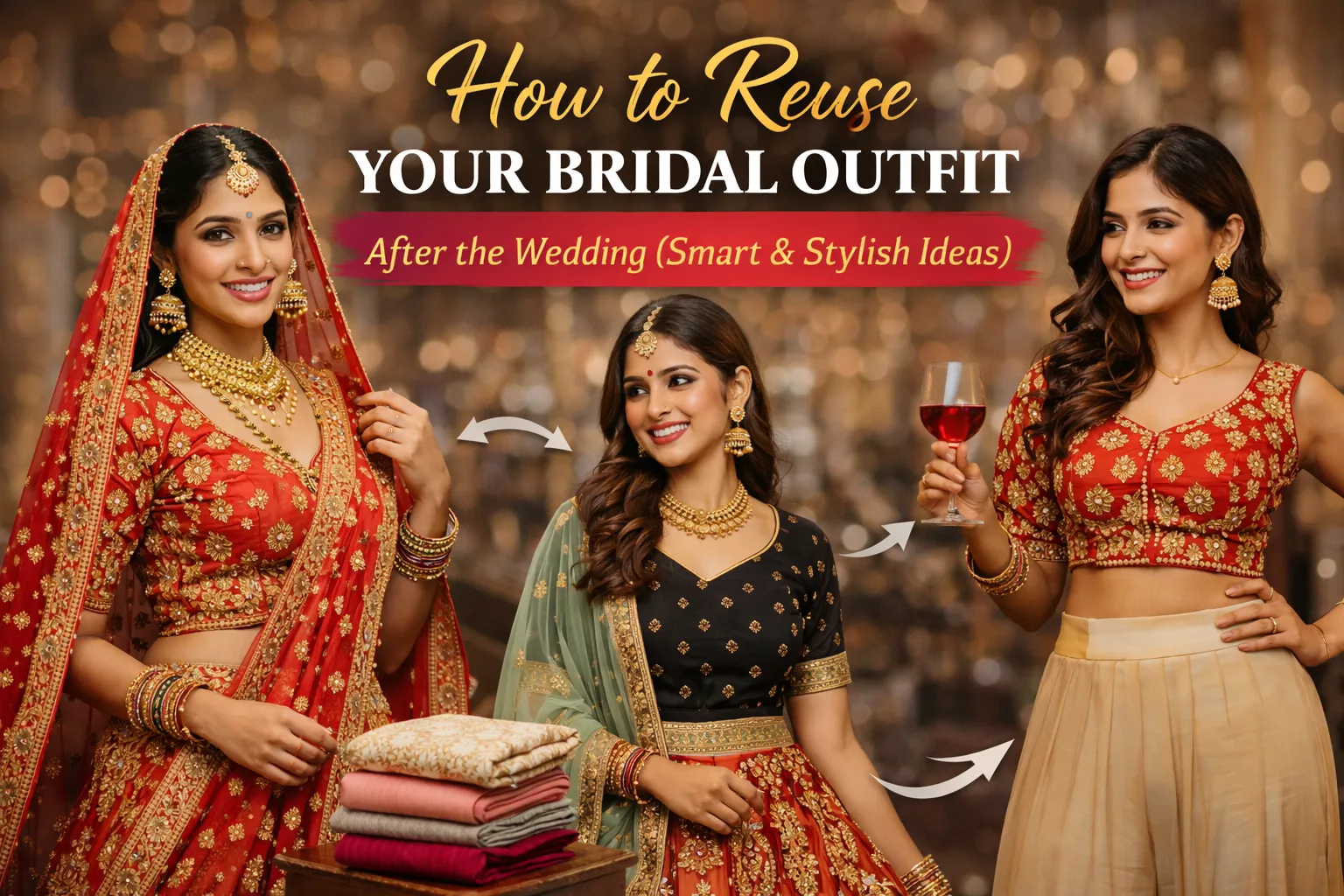
How to Reuse Your Bridal Outfit After the Wedding: Smart & Stylish Ideas
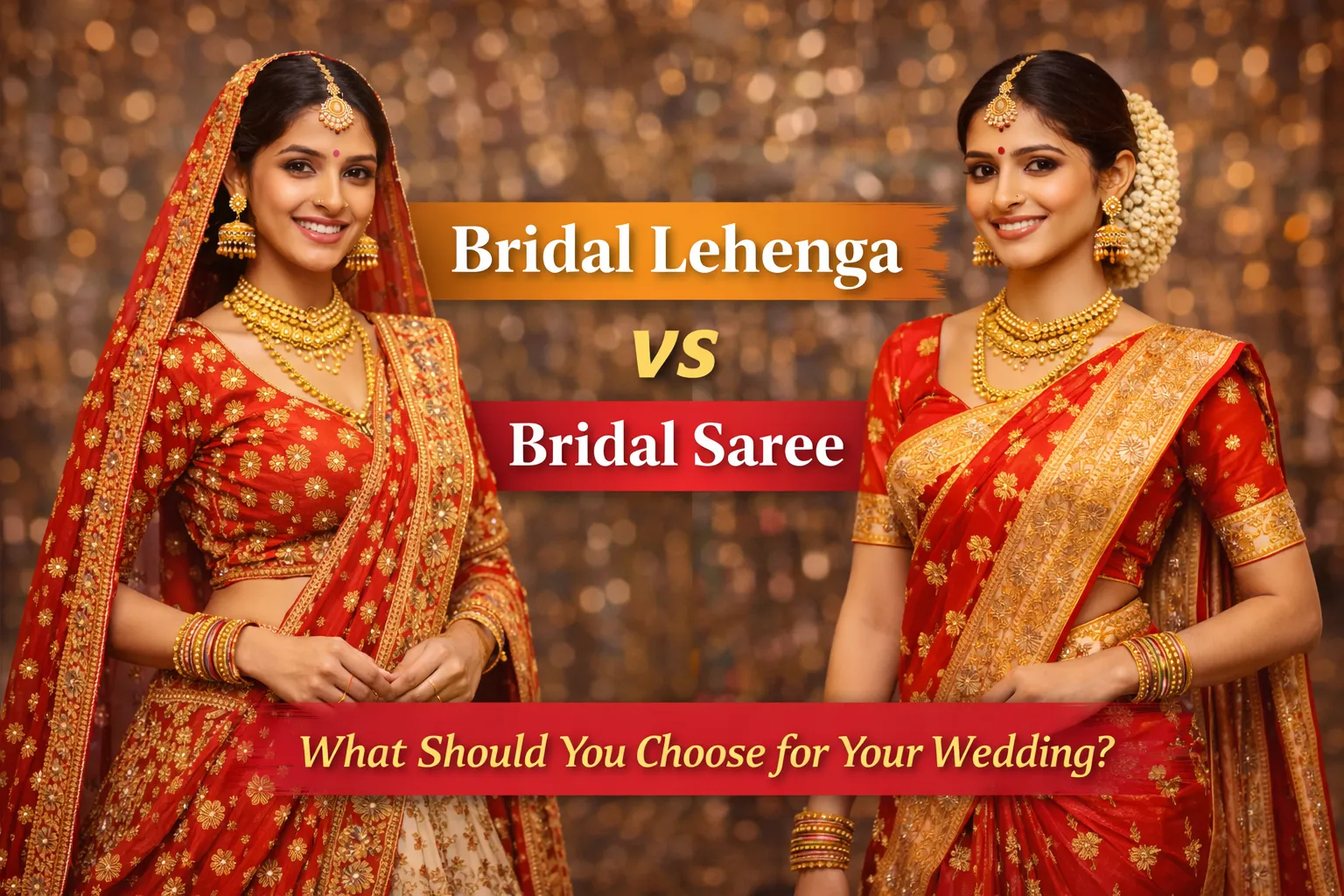
Bridal Lehenga vs Bridal Saree: What Should You Choose for Your Wedding?
About Author
